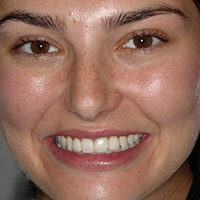
Some inherited conditions can cause people to be born without some or all of their permanent teeth. This is called congenital anodontia or hypodontia, and it affects about affects between 3 and 10 percent of people. In particular, the congenitally missing teeth that are most often absent are the upper lateral incisors, lower incisors, and premolars. Additionally, in some cases, the teeth that do develop are small or peg-shaped.
Furthermore, certain genetic conditions, such as Ectodermal Dysplasia, Cleidocranial Dysplasia, and Dentinogenesis Imperfecta, can also cause missing or unusually shaped teeth.
Although this is a treatable condition, it can affect a person’s quality of life. Missing teeth can make eating and speaking more difficult and may affect a child or teenager’s self-confidence. Fortunately, treatment options, including dental implants, orthodontics, and other restorative procedures, can improve function, appearance, and quality of life.
According to Dr. Glenn Wolfinger, board-certified prosthodontist and owner of Pi Dental Center said, “It is important to work with a pediatric dentist and an orthodontist in the early years. A prosthodontist, an expert in the restoration and replacement of teeth, should be consulted when the orthodontist feels the time is right for tooth replacement.”
Related Links:
- Congenital Anomalies and Missing Teeth
- Ectodermal Dysplasia
- Cleidocranial Dysplasia
- Dentinogenesis Imperfecta
- Zygomatic Dental Implant Treatment for Missing Teeth
- Amelogenesis Imperfecta
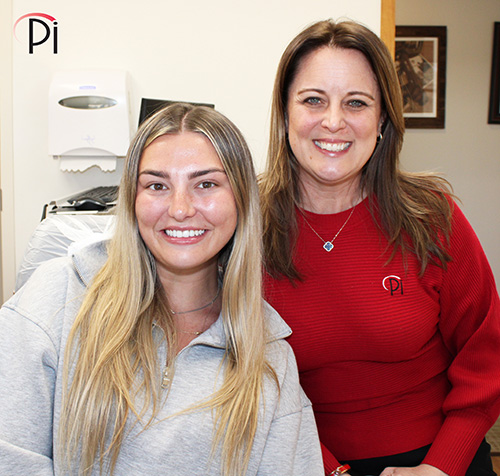
In this photo, Amy (Patient Relations Specialist) poses with her niece, who was treated at Pi Dental Center by Dr. Robert Slauch for congenitally missing teeth.