What to do about that unsightly edge produced by gum recession?
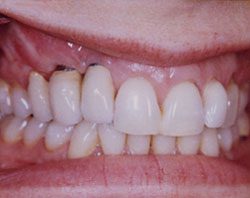
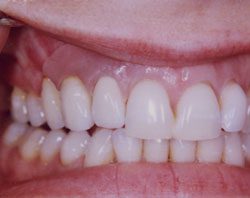
The gingival replacement unit (gingival mask) is a removable esthetic replacement for missing gingival (gum) tissues associated with bone and soft tissue loss around natural teeth or dental implants. Unlike a removable denture, it depends on the natural teeth or implants for retention and not the palate or the residual ridge which would retain a removable denture. Another term for gingival masks is artificial gums.
Part of the retention is mechanical, with tiny extensions of the mask material slightly projecting between the roots of the natural teeth or the implants just above the gum line. Part of the retention also comes from the natural capillary action created by the saliva and lastly part of the retention is dependent on the pressure of the lips against the gingival prosthesis.
Who can benefit from a gingival mask?
The gingival mask is especially beneficial to patients who have a very high (Class IV) smile line or a “gummy smile.” It can hide the dark lines around old crowns or caps that are often seen with patients who have experienced gingival or gum recession. This prosthesis can extend the useful life of functional crowns that are still biologically and biomechanically serviceable but suffer from an unsightly appearance due to the gum recession. Patients report ideal retention, using the prosthesis during all forms of oral function without the concern that the mask will become dislodged.
The gingival mask is also beneficial for patients with high lip lines and a gummy smile who have been treated with osseointegrated dental implants. With a high smile line these patients often display the junction of the implant prosthesis with the natural soft tissues. Sometimes, the titanium abutments may also be visible when the patient is laughing or speaking. The mask works beautifully to hide either the junction of the prosthesis or the titanium implants.
Hygiene Maintenance
Another benefit of the gingival replacement unit or mask is found in the ability of the Prosthodontist to design an implant-supported prosthesis with optimal configurations permitting easy access for oral hygiene maintenance. By keeping an appropriate amount of space between the implant-supported prosthesis or bridge and the underlying gum tissues the patient as well as the professional dental hygienist is able to more easily remove debris and plaque accumulations from the prosthesis and the titanium abutments. This ease of cleaning ability in turn promotes healthier gingival or gum tissues thereby maintaining greater potential for healthy long term use of the implant or tooth supported prosthesis itself. This is indeed a great insurance policy considering the considerable biologic and financial investments many patients make when implant-supported oral rehabilitations is completed.
Advantages and Disadvantages
The use of the gingival replacement unit or gingival mask has many advantages with almost no disadvantages. The only disadvantages of the gingival replacement unit would be the small amount of time it takes for the Prosthodontist to artistically create this prosthesis directly in the patient’s mouth or the small added cost of the devise itself. Replacement of the gingival prosthesis may also be required from time to time. The frequency of replacement is dependent on the care and uses each individual patient give the prosthesis. For example, patients have fractured or broken the prosthesis by mishandling it during cleaning procedures. Others have stored the prosthesis improperly when not in use and have sat or stepped on it inadvertently. We have even had reports of pets chewing on a patient’s gingival replacement unit.
Soaking the gingival replacement unit in a Chlorinated denture cleansing solution can also deteriorate the prosthesis and gradually bleach the pink gum tissue colors out of the plastic or resin material from which it is constructed.
The time required to initially fabricate or to replace a gingival mask will depend greatly on both the size and complexity of the prosthesis and the artistic skills of the Prosthodontist. As such, the costs for such prosthesis will be dependent on the materials used and the time it takes for the professional staff to complete its construction.
Most gingival prostheses can be made for less than the cost of a high quality ceramic crown.
Contraindications
One contraindications for a gingival replacement unit is an allergy to the materials used in the prosthesis. Another reason could be that the patient does not have the physical ability to wear, insert or remove the prosthesis. Most patients who say that they have very poor dexterity have actually been able to master the insertion and removal of the mask. The advantages of the gingival replacement unit in providing greatly enhanced esthetics outweigh any minor disadvantages considered.
Fabrication of a Gingival Mask: A Removable Gingival Replacement Unit